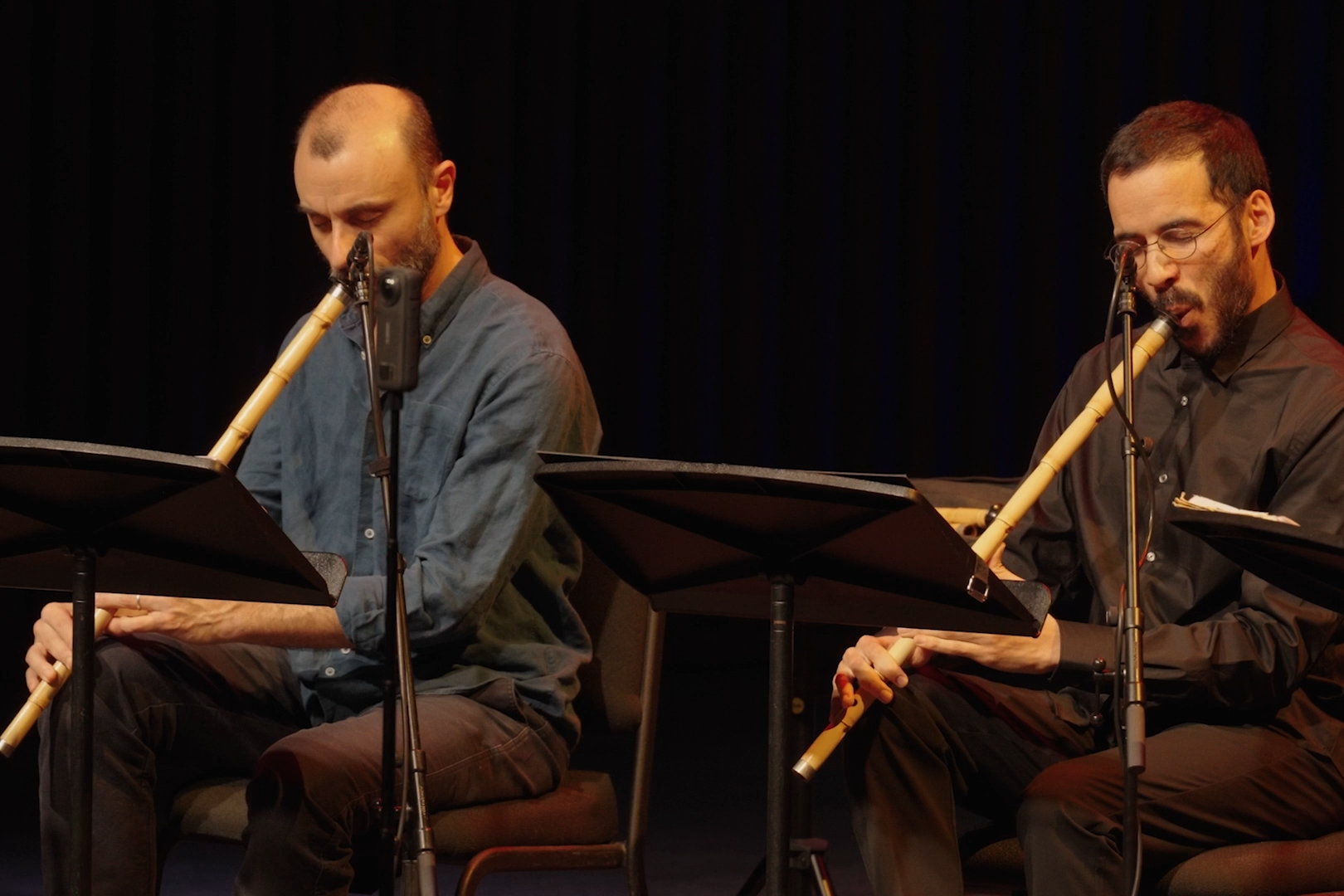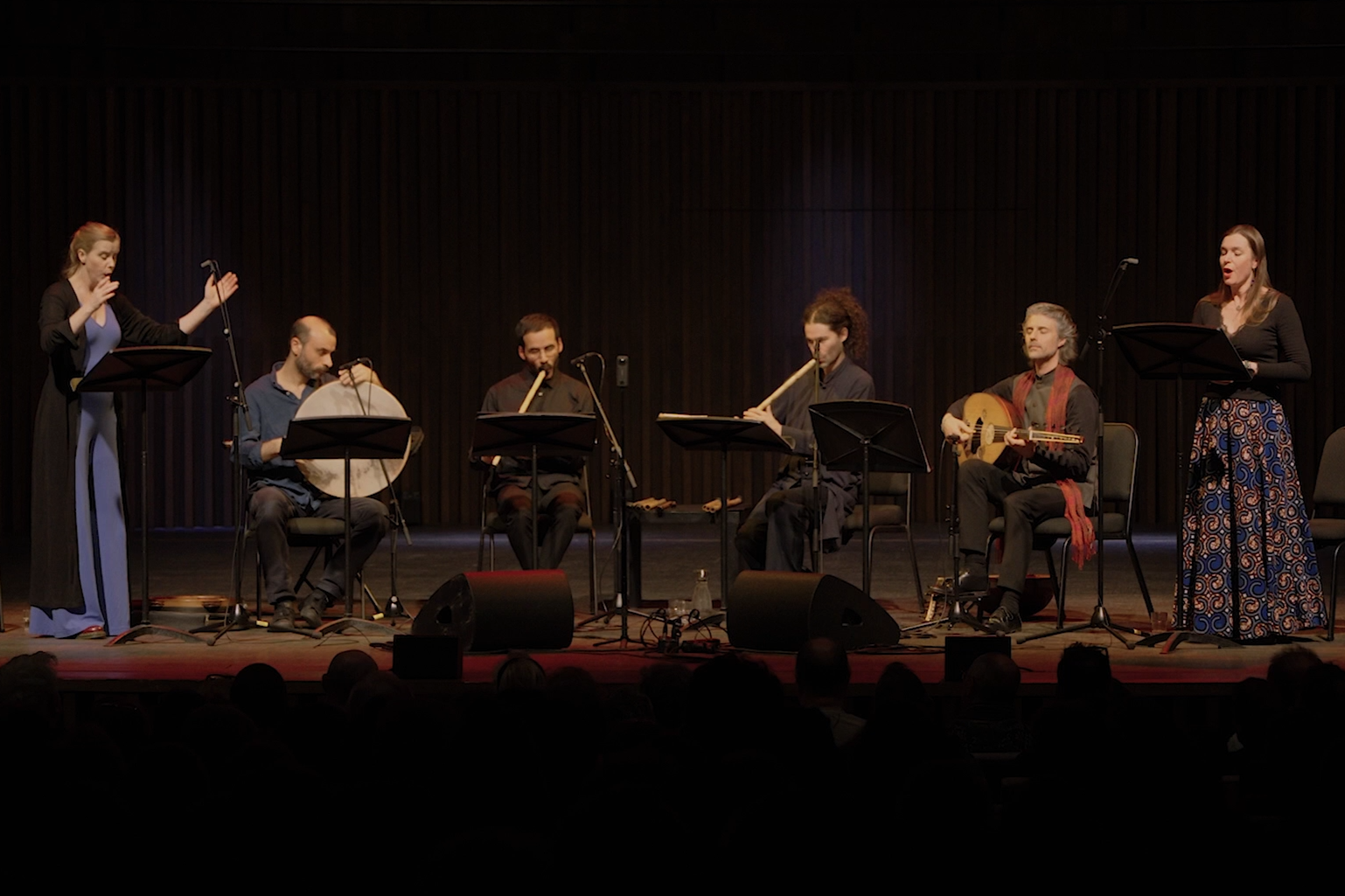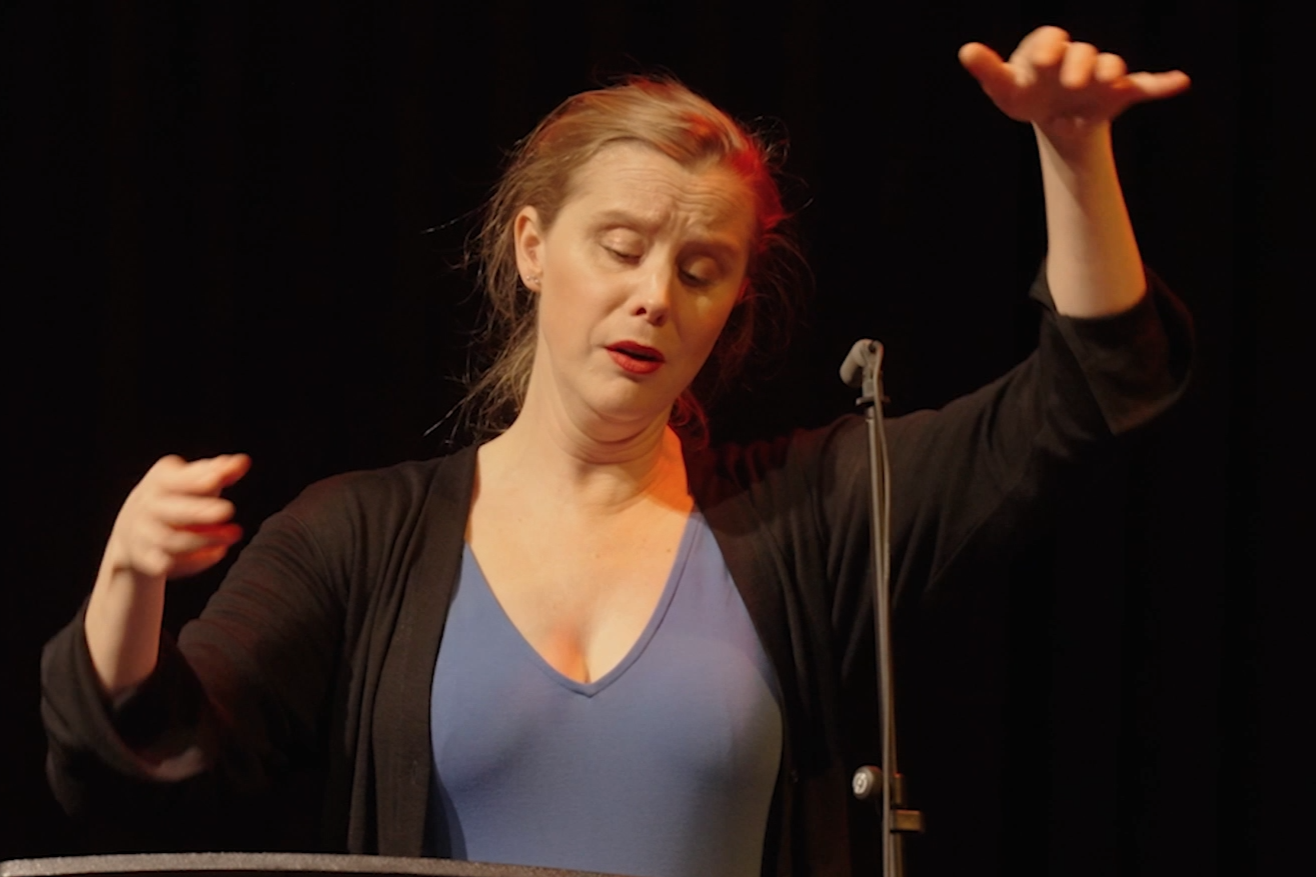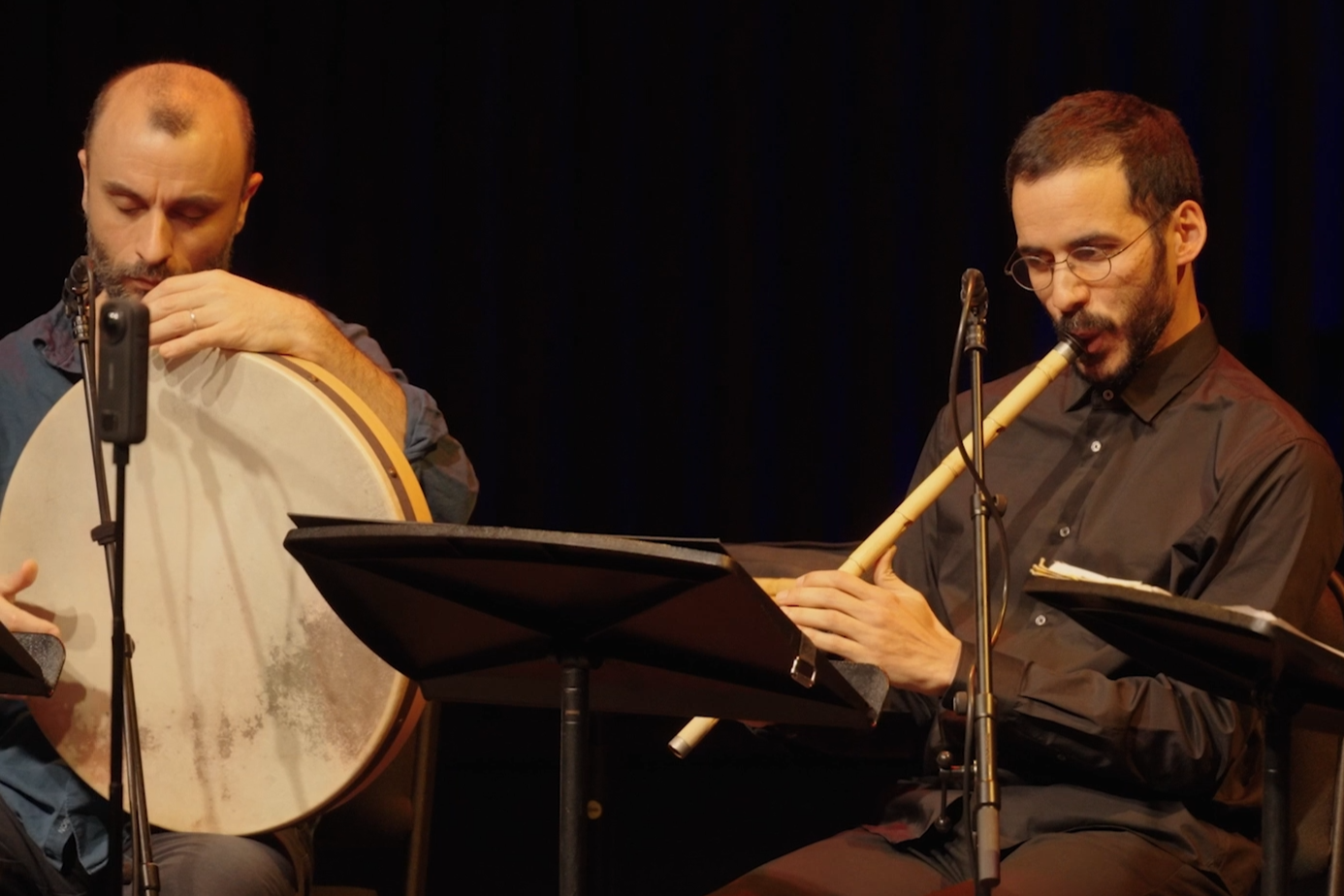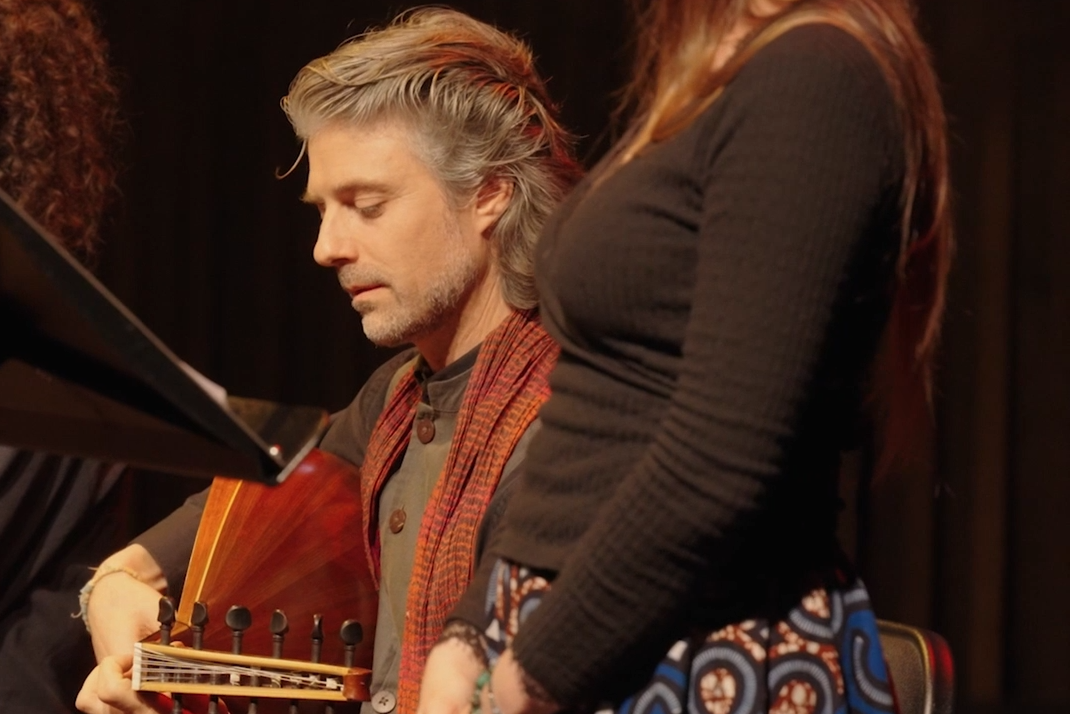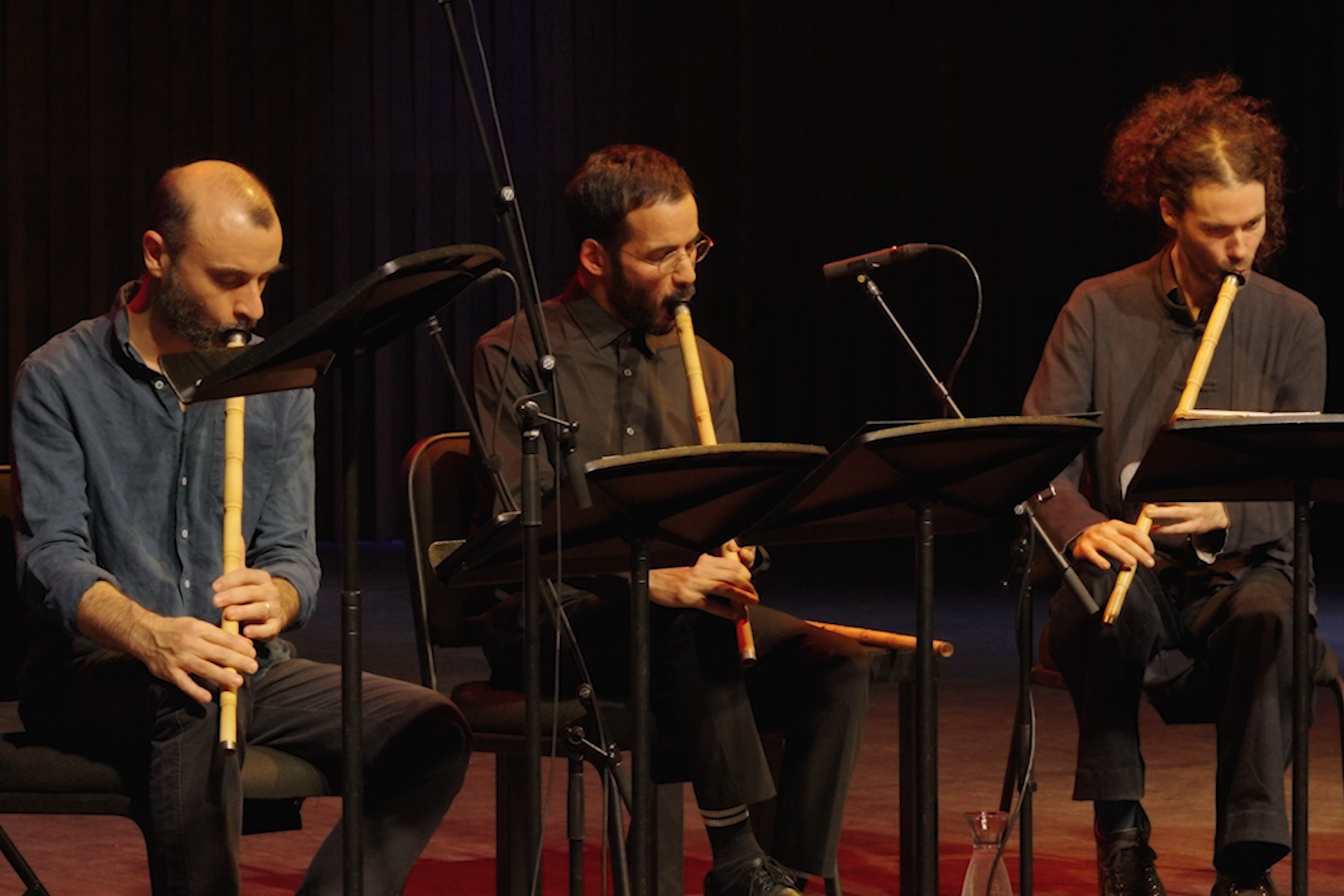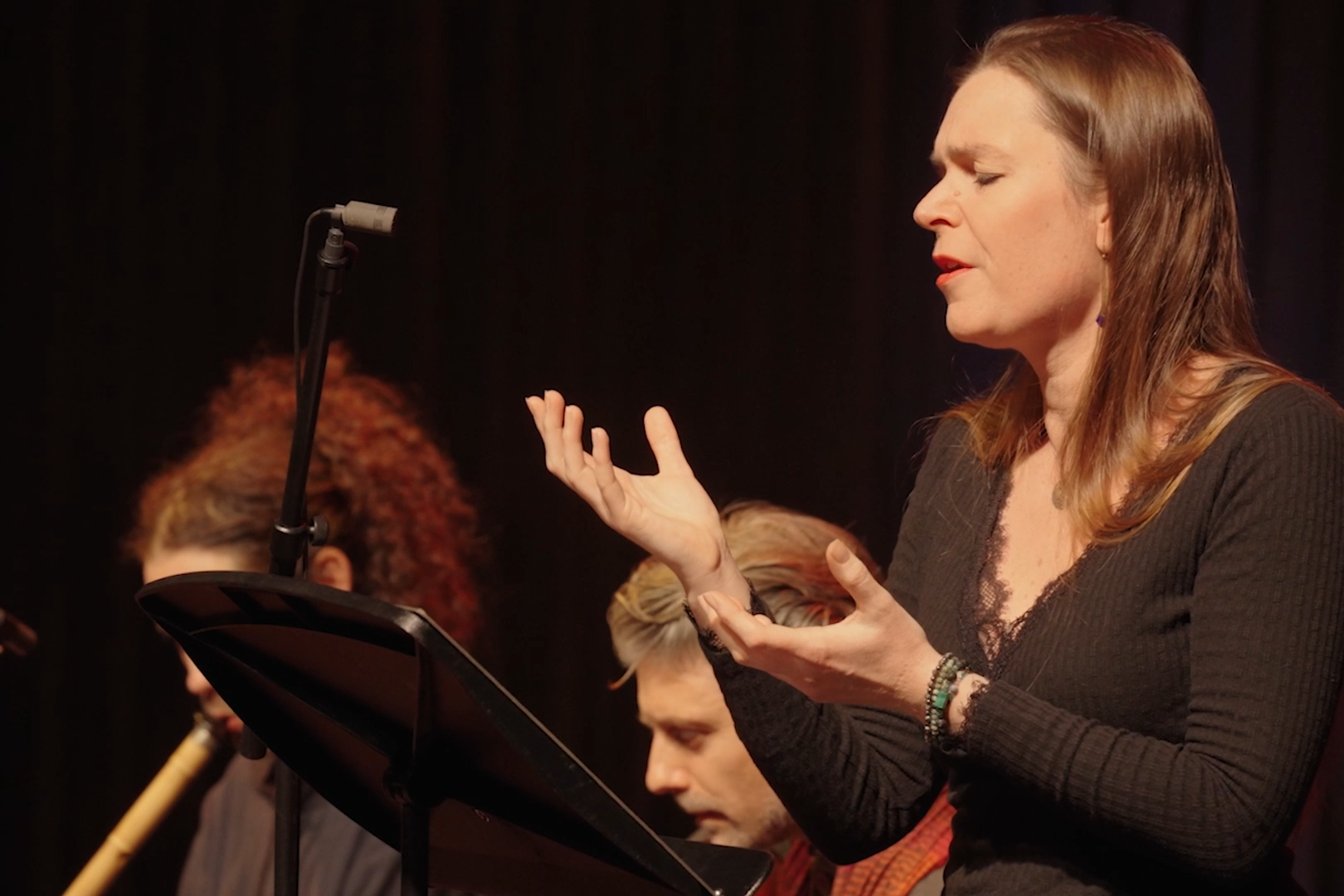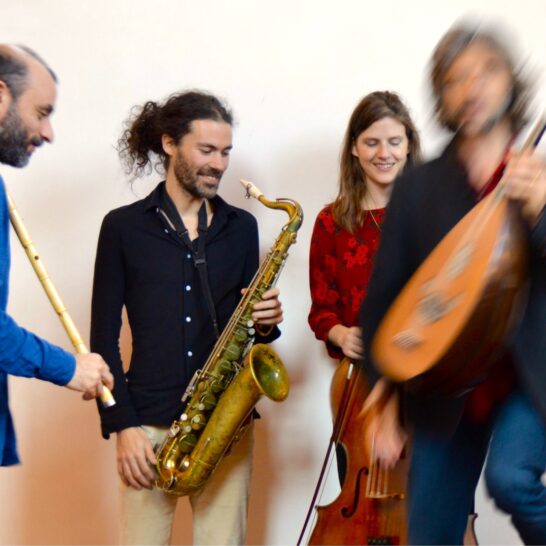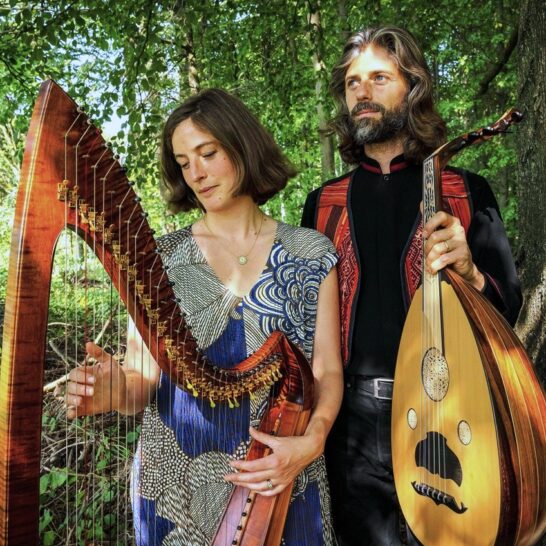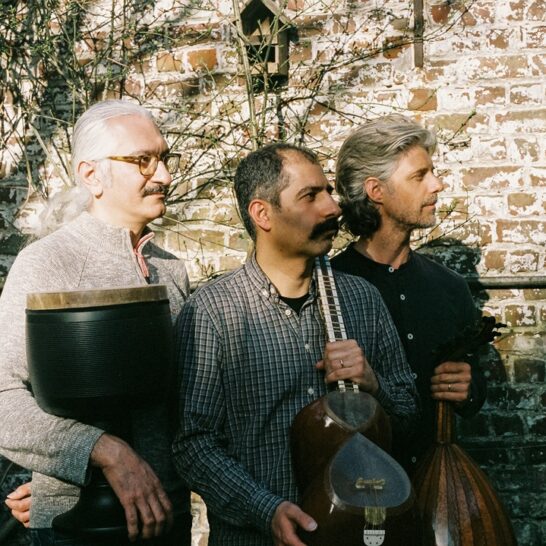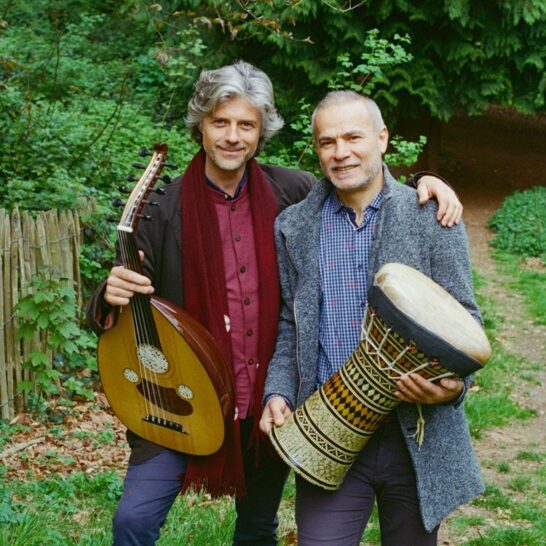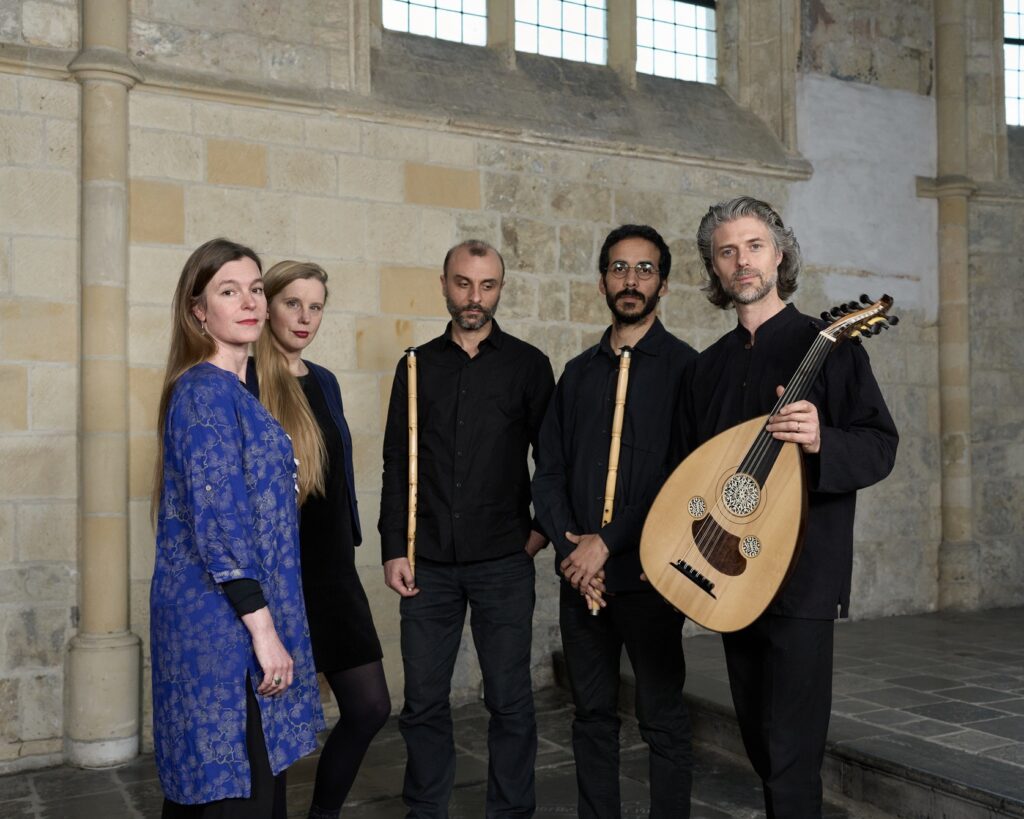
Eugénie De Mey and Lieselot De Wilde: vocals, Nabil Naïr, Nathan Daems and Christos Barbas : ney, Tristan Driessens : oud and artistic direction.
Illuminans Tenebras (“Illuminating Darkness”) is a newly founded Early Music ensemble that explores vocal traditions in relation with both Eastern and Western mysticism. For their debut album, Divan-e Shohoud – The Book of Visions, scheduled for release on the Belgian label Ramée in September 2026, artistic director Tristan Driessens shares the helm with Belgian singers Lieselot De Wilde and Eugénie De Mey, alongside members of his Soolmaan ‘Kashgul’ Quartet. Together, they shed new light on the music of 12th-century Benedictine Hildegard von Bingen. Selecting eight antiphons and responsories from the Codex of Dendermonde, the singers approach this monodic repertoire with distinctive vocal techniques, accompanied by Christos Barbas, Nabil Naïr, and Nathan Daems on Sufi ney flutes, and Tristan Driessens on the oud.
By replacing the commonly used vielles with traditional Middle Eastern instruments, Tristan Driessens and Illuminans Tenebras explore 12th-century monophony in ways that remain largely unexplored. Their music highlights the deep connections between medieval monody and the modal music or makam of the East—traditions that share essential features such as monophony, microtonality, and modal improvisation.
In Divan-e Shohoud – The Book of Visions, the ney and the oud—emblematic of Sufi music and the mystical writings of 13th-century Persian poet Rumi—evoke a message that resonates through Hildegard’s songs: one that addresses the intrinsically unifying nature of Eastern and Western mysticism across time and space.